Enhancing Privacy and Security With Wood Fencing: Strategic Placement and Design Considerations
How to Maximize Privacy and Security With Smart Wood Fence Design and Placement Strategies
Your home’s privacy and security start at the property line. A well-designed wood fence does far more than define boundaries—it creates a protective barrier that blocks unwanted views, reduces noise, enhances curb appeal, and increases property value. At Green & Son Builders, we’ve helped homeowners across the region design and install wood fences that transform outdoor spaces while providing genuine security benefits. The challenge many property owners face isn’t choosing a fence style but strategically designing and positioning a fence to actually deliver the privacy and security they need. Understanding height requirements, design options, placement considerations, and local regulations helps you invest in fencing that truly protects your property and family. This guide covers essential factors for maximizing privacy and security with wood fence design and placement.
Understanding Privacy and Security Needs
Before selecting fence design or placement, clarify your specific goals. Are you protecting a pool area, blocking street views, creating a secure play space for children, or deterring break-ins? Different goals require different approaches. Privacy-focused fences block views completely, while security-focused designs emphasize sturdy construction and controlled access points. Some fences serve both purposes seamlessly.
Studies show there are over one million residential burglaries annually in the United States. Fences made of solid wood materials can deliver approximately fifty percent return on investment when you eventually sell your home, making them both protective and financially sound investments. Beyond security, privacy fences reduce street noise, create serene outdoor retreats, and establish clear property boundaries that prevent neighbor disputes.
Understanding your property’s specific challenges shapes fence design. Sloped terrain, neighboring structures, tall trees, and proximity to windows all affect how high your fence must be for complete privacy. Your front yard presents different challenges than your backyard, requiring tailored design approaches.
Strategic Height and Placement Decisions
Height is the most critical privacy factor. A four-foot fence provides minimal privacy and only meets basic code requirements in many areas. Six feet is the minimum for meaningful privacy in most residential settings, especially when neighbors have second-story windows or elevated decks. Your topography matters tremendously—a six-foot fence on sloped terrain may only provide four feet of privacy on the high side, requiring design adjustments.
Placement along your property line requires precision. Before installation, always contact utility companies to mark underground lines preventing costly or dangerous digging mistakes. Call 811 for free utility location services. Also verify local zoning regulations regarding setback distances from roads, sidewalks, and neighboring properties. Violating placement regulations can result in removal orders or fines regardless of construction quality.
Gate placement deserves strategic consideration. Gates should be wide enough for lawn equipment access and ideally positioned away from direct views of your property. Multiple gates offer flexibility—perhaps one for daily access and another providing alternate entry from your yard’s far side. Well-placed gates enhance security by controlling access points.
Optimal Wood Fence Design for Privacy and Security
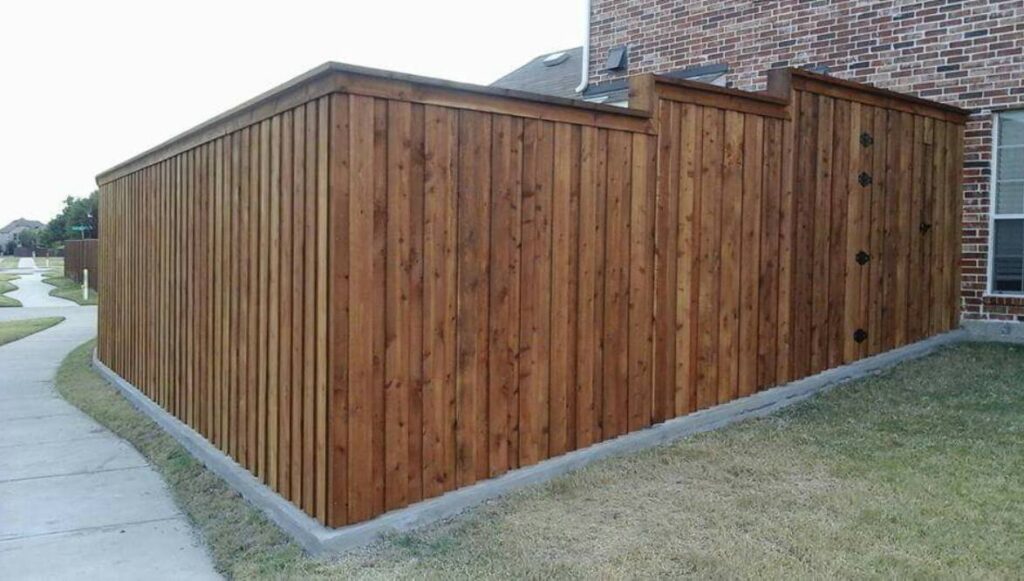
Solid board fences offer maximum privacy by placing boards tightly together with no gaps, completely blocking views from both sides. This classic design provides the strongest security barrier and works well for rear yards, pool areas, and sensitive property sections. The “finished” side faces outward while structural rails remain hidden inside, meeting aesthetic and code requirements.
Board-on-board fences feature alternating overlapping boards creating a shadowbox effect. This design allows some light and air penetration while maintaining privacy from most angles. It’s slightly less secure than solid board but offers a softer visual appearance many homeowners prefer. Shadowbox designs work beautifully in front yards where some visual openness is desired.
Horizontal wood fences provide modern aesthetic appeal with contemporary styling. Using horizontal planks instead of vertical boards creates clean lines and visual width. Modern designs can be semi-private allowing light penetration while maintaining security, or fully solid for maximum privacy. Consider spacing, stain colors, and material selection to match your home’s architecture.
Material Selection and Durability Considerations
Cedar and redwood are preferred for privacy fences due to natural rot and insect resistance, long-lasting aesthetics, and the ability to accept various stains and paints. These premium woods require periodic maintenance but deliver superior appearance and durability lasting decades with proper care. Pressure-treated wood offers affordability and reliable performance when professionally installed. Steel or metal frame elements can enhance security and create hybrid designs combining wood’s warmth with metal’s strength.
Maintenance impacts longevity significantly. Wood fences require staining or painting every few years to protect against weathering, UV damage, and moisture. Regular inspection catches problems early, preventing expensive structural damage. Pressure-treated posts especially benefit from proper concrete installation and post-saver rot barriers at the base.
Professional Installation and Local Compliance
Proper installation is critical for security and longevity. Posts should be spaced consistently six to eight feet apart, set deeply enough in concrete preventing leaning, and installed with galvanized or stainless steel hardware preventing rust. Professional installation ensures your fence actually delivers promised security and privacy.
Always obtain necessary permits before installation. Most municipalities require fence permits specifying height, materials, and design approval. This step prevents costly removal orders and ensures your fence complies with local aesthetics and safety standards. Professional builders understand local codes intimately, guiding compliant designs meeting both regulations and your privacy goals.
Invest in Privacy and Security That Lasts
Your home deserves a fence that protects your family, enhances your property value, and brings satisfaction for years to come. At Green & Son Builders, we combine strategic design expertise with quality craftsmanship to deliver wood fences that truly enhance privacy and security.
Ready to maximize your property’s privacy and security with a professionally designed and installed wood fence? Contact Green & Son Builders today for a consultation. Let’s design the perfect fence for your specific needs and property.